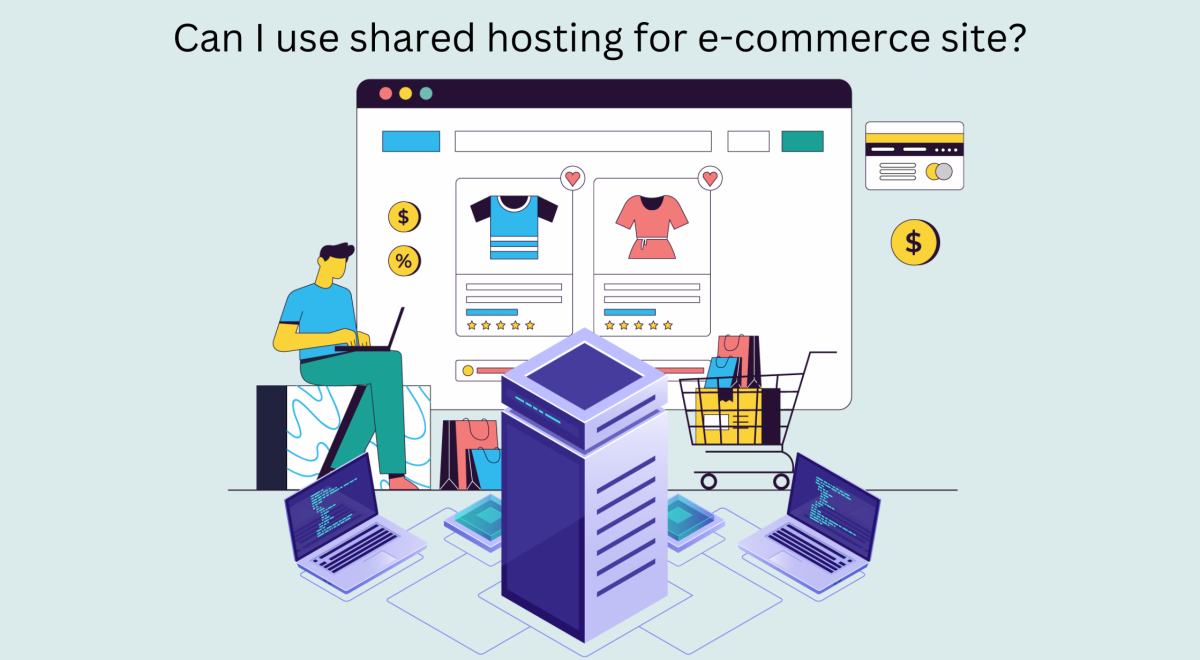
shared hosting for e-commerce is like when multiple websites share space on one server to keep costs down. It’s perfect for individuals and businesses just starting online, especially if you have a small to medium-sized site.
With shared hosting for e-commerce, your site has its own little space on the server, so you don’t have to worry about other websites interfering. The hosting provider takes care of managing the server, keeping things fair for everyone, and making sure it’s secure.
It’s a wallet-friendly and user-friendly option, especially if you’re not a tech whiz. The provider handles all the nitty-gritty stuff, like server maintenance and security, so that you can focus on your website.
Shared hosting for e-commerce Sites is a great way to get going online, but it might not be the best if you’re expecting a ton of traffic or need lots of resources. Knowing the basics can help you decide if it’s the right fit for your website and budget.
Why Shared Hosting for E-commerce Beginners?
Shared hosting for e-commerce sites is a great choice for new entrepreneurs. It’s affordable and gives you all the essential features without breaking the bank. You can save money and still get user-friendly interfaces and easy installations for popular e-commerce platforms.
Plus, it comes with SSL certificates and regular backups for security, making it a perfect starting point for your online business. Don’t worry about the costs – go with shared hosting for e-commerce and start building your digital empire today!
Can Shared Hosting Handle Your Online Store?
In online selling, speed is super important. Although shared hosting for e-commerce is cheaper, it might slow down your online store. Slow loading times are bad for user experience and sales. Research shows that even a one-second delay can cut conversions by 7%. With shared hosting for e-commerce, your site has to compete for server resources, which can result in slowdowns during peak traffic times.
How fast your site loads depends a lot on the hosting environment. Shared hosting usually doesn’t have the optimizations needed for online selling, leading to slower load times and worse performance. This could frustrate customers and send them to faster websites.
Consider switching to e-commerce-specific hosting to get the most out of your online store. These options come with dedicated resources, better security, and optimized setups that improve site performance. Investing in solid hosting can lead to more sales and happier customers.
Protecting Your E-commerce Data on Shared Servers
When you’re in e-commerce, security is a big deal. Shared servers are cheap but risky for sensitive data. You’ve got to protect your business and customers by beefing up security.
Make sure your hosting provider is PCI compliant to keep payment info safe. And get some SSL certificates to scramble data, making it tough for hackers.
Do regular security checks and updates to stay ahead of cyber threats. Boost your defenses with strong passwords and two-factor authentication, and teach your team about phishing risks.
Think about using a Web Application Firewall (WAF) for more protection against web attacks. Please back up your data often and keep it safe off-site to guard against breaches or server problems.
Remember, securing your e-commerce costs less than dealing with a data breach. Protect your data to keep your business’s reputation and success intact.
Will Shared Hosting Grow with Your Business?
As your online shop grows, you need to think about hosting that can grow with it. Shared hosting for e-commerce might be fine at the start, but it could struggle when more people visit your site, making it slow or crash when there’s a sale. You should keep an eye on your hosting options and consider moving to VPS or dedicated hosting as your traffic and sales go up. It’s important to make sure your hosting can handle your shop’s growth. Dealing with scalability problems early on will make things better for your customers and help your business succeed in the long run.
Alternatives to Shared Hosting for E-commerce Sites
When it comes to starting an online business, shared hosting for e-commerce just doesn’t cut it. Here are some better options to consider:
- VPS hosting: It’s all about finding the right balance between resources and cost-effectiveness, giving you more control and better performance.
- Dedicated servers: If you need ultimate power, speed, and security for your high-traffic site, dedicated servers are the way to go. You can customize them extensively to suit your needs.
- Plesk hosting: This option offers scalability and reliability to handle those sudden spikes in traffic during sales.
- Managed WordPress hosting for e-commerce sites: This type of hosting is tailored for speed, security, and seamless plugin integration.
If you’re serious about your e-commerce site’s future, it’s time to upgrade to hosting that can support its growth and deliver the performance your customers deserve.
Choosing the Right E-commerce Hosting
When choosing an e-commerce hosting solution, think about what you really need. Look into things like security features, payment gateway integration, and inventory management tools. Knowing this stuff will help you narrow down your options.
Check out how much traffic you expect to get on your site. Get a hosting solution that can grow with you and handle spikes in traffic without slowing down. Make sure your site is fast and stays up because that’s super important for keeping customers happy and getting noticed by search engines.
Keep your budget in mind when you’re choosing hosting. Cheaper options might sound good, but it’s worth investing in quality for the long run. Look for a provider that gives you good value for your money.
Be honest about your tech skills. If you’re not great with complex server setups, go for managed hosting. But if you’re confident and want more control, opt for self-managed hosting.
By thinking about your hosting needs, expected traffic, budget, and tech skills, you can find the e-commerce hosting solution that’s perfect for your business goals.
1. Is shared hosting still a viable option for new e-commerce stores in 2025?
Yes, shared hosting can still be a viable and cost-effective starting point for new or small e-commerce stores with limited budgets and relatively low traffic expectations. Many providers offer e-commerce-specific shared plans with features like one-click WordPress/WooCommerce installation and free SSL certificates, which are crucial for online sales. However, it’s important to be aware of its limitations for future growth.
2. What are the main benefits of using shared hosting for an e-commerce website?
The primary benefits include:
- Affordability: It’s the most budget-friendly hosting option, as server costs are distributed among many users.
- Ease of Use: Shared hosting often comes with user-friendly control panels (like cPanel) and managed services, making it easy for beginners to set up and manage their online store without deep technical knowledge.
- Maintenance: The hosting provider handles server maintenance, security updates, and infrastructure, freeing up your time to focus on your business.
- Included Features: Many plans offer free SSL certificates, email hosting, and sometimes even a free domain for the first year, which are essential for e-commerce.
3. What are the biggest drawbacks or risks of shared hosting for e-commerce, especially as my store grows?
The main drawbacks are:
- Limited Resources: Since resources (CPU, RAM, bandwidth) are shared, your site’s performance can be impacted by “noisy neighbors” – other websites on the same server that consume a lot of resources. This can lead to slower loading times and even downtime during traffic spikes.
- Security Concerns: While providers implement security measures, sharing a server can theoretically increase vulnerability if one site is compromised. E-commerce sites handle sensitive customer data, so robust security is paramount.
- Limited Scalability: Shared hosting offers minimal scalability. As your traffic and product catalog grow, you’ll quickly outgrow the shared resources, leading to performance issues and a need to upgrade.
- Less Control: You have limited control over server configurations and software installations, which might restrict advanced customizations or specific e-commerce platform requirements.
4. How does shared hosting security differ for e-commerce compared to other hosting types? What should I look for?
While shared hosting provides basic security, e-commerce sites need more. Look for providers that offer:
- Free SSL Certificates: Absolutely essential for encrypting customer data during transactions.
- Web Application Firewalls (WAF): To protect against common web exploits.
- DDoS Protection: To defend against denial-of-service attacks.
- Regular Malware Scanning and Removal: Proactive detection and cleaning of malicious software.
- Automated Backups: Regular backups are critical for disaster recovery.
- PCI DSS Compliance: While the hosting provider can offer a PCI compliant environment, achieving full PCI compliance for your store is also your responsibility.
5. When should an e-commerce business consider upgrading from shared hosting?
It’s time to upgrade when you experience:
- Slow Loading Times: If your site consistently loads slowly, impacting user experience and SEO.
- Frequent Downtime or Server Crashes: Especially during sales events or traffic spikes.
- Running Out of Resources: Reaching bandwidth or storage limits regularly.
- Increased Security Concerns: Feeling a need for more isolated and controlled security.
- Rapid Business Growth: Anticipating significant increases in traffic, product offerings, or complex functionalities.
Conclusion
Shared hosting for e-commerce is a great option for small to medium-sized startups. It’s affordable and flexible, allowing you to get online, test the market, and attract customers. As your business grows, you can upgrade to more powerful hosting solutions that fit your specific needs and long-term goals.